As digital marketing matures, businesses are no longer asking whether marketing works. They are asking how it should work for their stage, goals, and long term vision. This is where the debate between performance marketing and growth marketing becomes important.
Both approaches aim to drive results. Both rely on data. Both use digital channels. Yet they operate with very different mindsets, timelines, and definitions of success.
Many brands unknowingly choose one approach when they actually need a combination of both. Understanding the difference between performance marketing and growth marketing helps businesses avoid short sighted decisions and build sustainable momentum.
What Is Performance Marketing
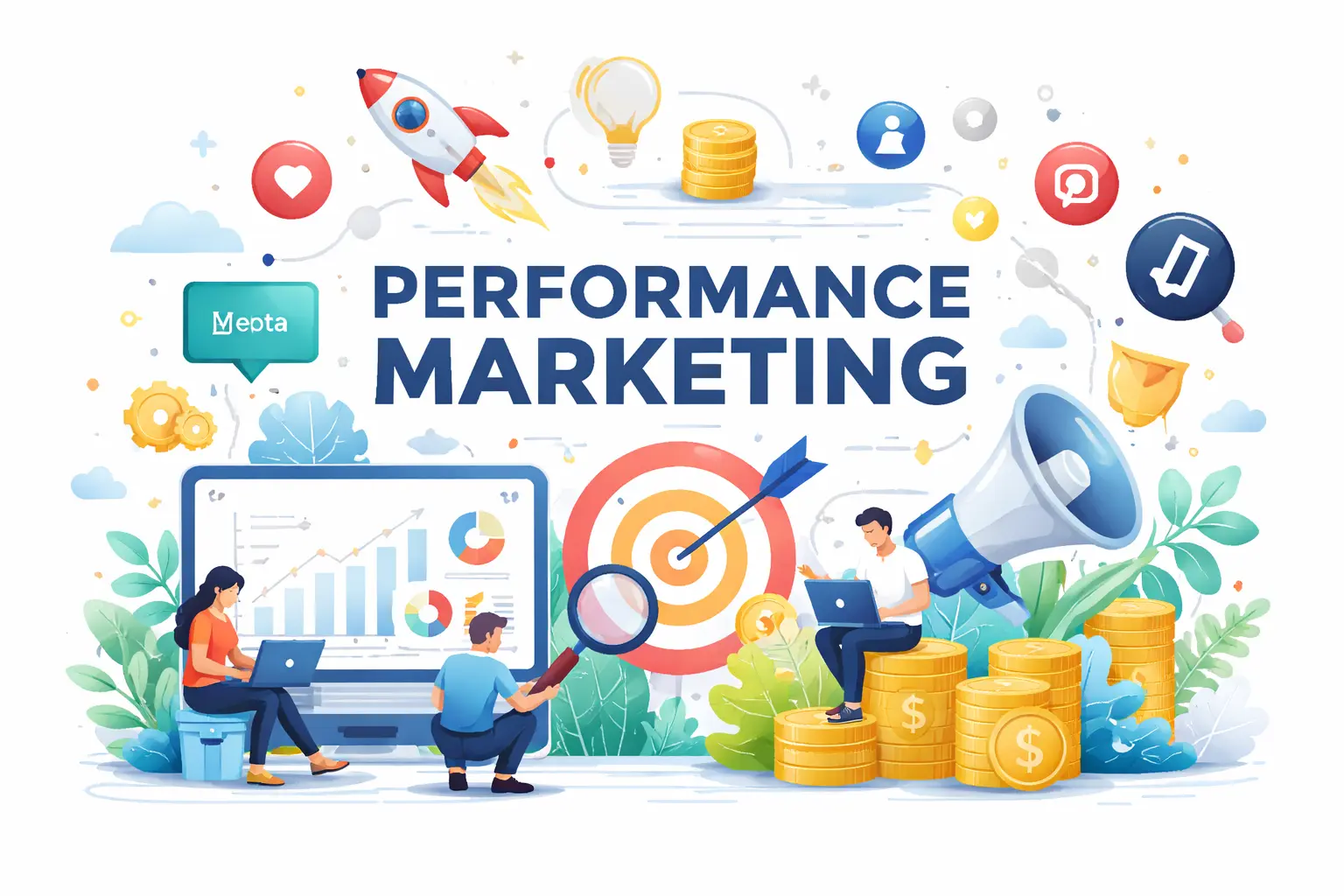
Performance marketing is a results driven approach focused on measurable actions. Every campaign is evaluated based on clear outcomes such as leads, sales, conversions, or revenue.
The defining feature of performance marketing is accountability. Spending is tied directly to results, and success is measured in numbers that can be tracked and optimized.
Core Focus on Measurable Outcomes
Performance marketing answers direct questions:
- Leads generated: How many leads did we generate
- Revenue impact: How much revenue did this campaign drive
- Return efficiency: What was the return on ad spend
The focus is on immediate outcomes. Campaigns are launched, monitored closely, optimized continuously, and scaled only when results meet benchmarks.
This makes performance marketing attractive for businesses that need predictable returns and quick feedback.
Typical Channels and Tactics Used
Performance marketing usually relies on channels where attribution is clearer and control is higher. These include paid search, paid social, marketplaces, affiliate marketing, and retargeting.
- Landing pages: Conversion focused landing pages
- Audience strategy: Audience targeting and retargeting
- Ad testing: Testing of ad variations and offers
- Spend control: Bid and budget optimization
Performance marketing thrives on efficiency and precision.
What Is Growth Marketing
Growth marketing takes a broader and longer term view of marketing. Instead of focusing only on immediate conversions, it looks at the entire customer journey from awareness to retention and advocacy.
Growth marketing aims to build systems that compound over time rather than campaigns that peak and decline.
Focus on Long Term Scalable Growth
Growth marketing is not limited to acquisition. It focuses on how users discover a product, engage with it, return to it, and recommend it.
The goal is sustainable growth driven by learning, iteration, and improvement across the funnel.
- Drop off analysis: Why do users drop off
- Retention drivers: What drives repeat usage
- Value growth: What increases lifetime value
Success is measured over months and years, not just days or weeks.
Key Differences Between Performance Marketing and Growth Marketing
While both approaches use data and digital tools, their philosophy differs significantly.
Short Term Results vs Long Term Impact
Performance marketing prioritizes short term wins. It aims to generate results quickly and efficiently.
Growth marketing prioritizes long term impact. It accepts that some efforts may not show immediate returns but will compound over time.
Metrics That Define Success in Each Approach
- Performance metrics: Cost per lead, cost per acquisition, conversion rate, return on ad spend
- Growth metrics: Customer lifetime value, retention, engagement, repeat purchase behavior
The difference lies in efficiency versus sustainability.
Final Thoughts
Performance marketing and growth marketing are not opposing philosophies. They are complementary tools.
Performance marketing answers the question of efficiency. Growth marketing answers the question of sustainability.
Real success comes from knowing when to optimize and when to experiment, when to scale and when to build. Marketing works best when short term performance supports long term growth.
Adarsh T S
Digital Marketing Specialist | SEO & Content Strategy | Performance Marketing