Affiliate influencer marketing pays a creator a commission on the sales their content drives, either instead of a fixed fee or on top of one. For most brands in India today, the workable answer is a hybrid: a base fee for the content plus a commission on tracked sales. Commission-only deals are still rare, and affiliate links capture only part of what a creator's audience does.
The question became urgent this week. On November 16, 2026, Instagram began letting creators add Amazon affiliate links to Reels and feed posts, a launch Wired reports is for US-based creators. On November 17, Meesho announced a partnership with YouTube Shopping that it expects to bring more than 2 lakh creators onto the platform, Storyboard18 reports. This guide sets out what changed, what creators say they earn, how fee, commission and hybrid deals compare, and how to structure one.
Key takeaways
- The answer: A base fee plus a commission is the practical default. Saurabh Sankpal of Re. Awakening Collective told Storyboard18 that pure commission-only deals are still rare.
- The platforms: Instagram's Amazon links launched for US creators, with no India date announced. Meesho's YouTube Shopping tie-up is aimed at Indian creators.
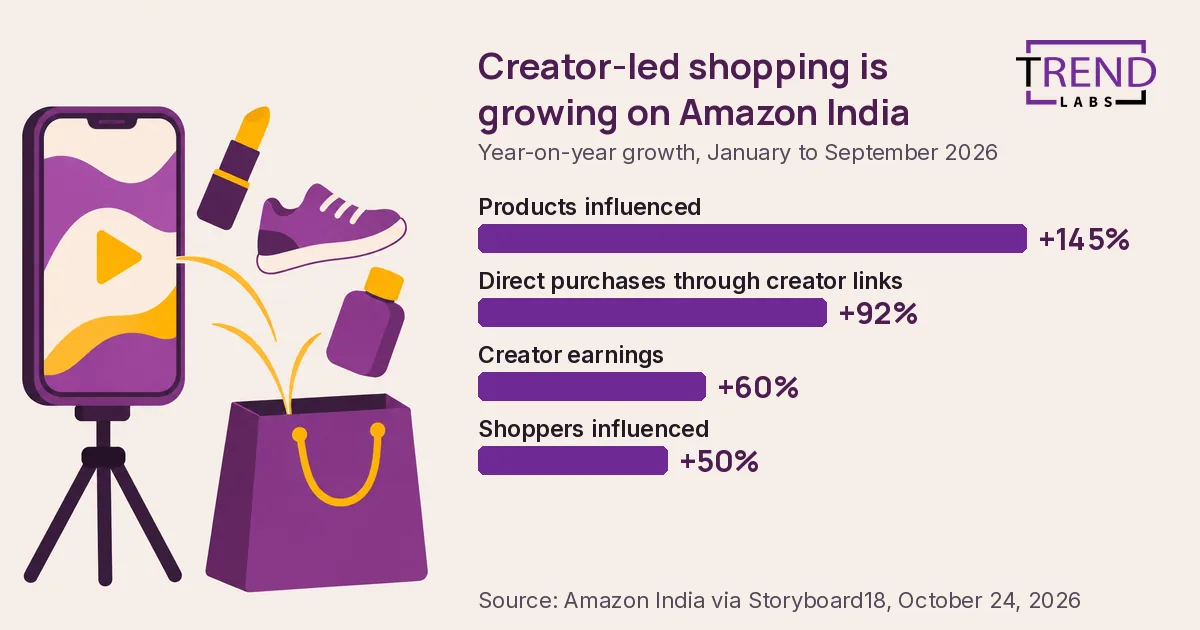
- The scale: Amazon India says 28 million shoppers bought directly through creator links from January to September 2026, up 92%. That is a company figure.
- The earnings: Creators told Storyboard18 that commissions are about 2% to 4% of their income, so fixed fees still carry most deals.
- The rules: ASCI treats compensation as a material connection, so an affiliate post needs a clear disclosure.
In this guide
- What changed in Instagram affiliate marketing and YouTube Shopping this week?
- How big is creator-led shopping in India?
- What do creators earn from affiliate links?
- Influencer marketing vs affiliate marketing: what is the difference?
- Why is the hybrid model gaining ground?
- How should a brand structure a hybrid creator deal?
- What do India's disclosure rules say about affiliate posts?
- What this means for your next campaign
- Frequently asked questions
What changed in Instagram affiliate marketing and YouTube Shopping this week?
Instagram affiliate marketing: Amazon links in Reels
Image: Storyboard18. Click to read the full report.
TechCrunch reported on November 16, 2026 that eligible creators can now add Amazon affiliate links directly to Reels and feed posts, with up to 30 products on a Reel and 20 on a feed post. Instagram says adding products is free, it takes no commission and it charges no transaction fees. Amazon pays the commissions, and creators see an estimated rate for each product before they post. Meta told TechCrunch that links placed directly on Reels and posts draw about twice as many clicks as links in a creator's bio. That is a company claim we could not verify.
The catch for Indian brands is eligibility. Wired reports that the feature is for US-based adults with a professional account and more than 1,000 followers, and Retail Dive describes it as a launch for US creators. None of the sources we read announces an India date, so Indian creators should not plan around it yet. Instagram spokesperson Megan Buckley told Wired that the company does not expect a sudden influx of shopping content from the launch.
YouTube Shopping affiliate program: Meesho's India push
Image: Storyboard18. Click to read the full report.
Meesho's partnership is aimed at India. Under the tie-up announced on November 17, creators can tag Meesho products in videos, Shorts and livestreams and earn a commission. Meesho says the program opens more than 30 million affiliate products across 40 categories from over 2 lakh sellers, and that creators need at least 500 subscribers, subject to YouTube's eligibility criteria. It also says 81% of its Creator Club creators are from non-metro cities and about 90% of its active creators are nano creators. These are company figures.
How big is creator-led shopping in India?
Image: Storyboard18. Click to read the full report.
Platform data suggests it is already large, though most of it comes from the companies selling the service. Nidhi Thakkar of Amazon India told Storyboard18, in an interview published on October 24, 2026, that the Amazon Influencer Program has 2 lakh creators and that 75% of them are from outside the metros. For January to September 2026 she cited these figures:
- Shoppers influenced: 42 million, up 50% year on year.
- Direct purchases through a creator link: 28 million shoppers, up 92%.
- Products influenced: 133 million, up 145%.
- Creator earnings: up 60%.
Outside data points the same way, with the same caution. Trendweave, a creator monetization platform, analyzed more than 4 million orders and reported that influencer-driven sales in India rose over 28% year on year in the first half of 2026, while creator earnings from product sales grew more than 35%, according to Storyboard18 (July 11, 2026). Fashion made up 30% of creators' earnings, home goods 13% and appliances and electronics 11%. Inc42 reported in February 2026 that creator-commerce platform Wishlink raised USD 17.5 million and says it works with 40,000 monthly active creators. All of these are vendor or company figures, and none is an independent audit.
What do creators earn from affiliate links?
Less than the view counts suggest. In a report published on November 19, 2026, Storyboard18 spoke to creators about the new integration. Creator Renee said a Reel with about 2 million organic views earned at most ₹10,000 to ₹12,000 in affiliate commission, against her estimate of ₹60,000 to ₹70,000 in product sales, and that affiliate income is about 2% of her total. YouTuber Jagjyot Singh put his commissions at roughly 2% to 4% of his income. Twerk N Slay said most of their income still comes from fixed brand partnerships. Storyboard18 notes that these are the creators' own reports, and that there is no evidence yet that the Amazon integration raises earnings.
Commission rates also swing by category. Amazon Associates India's fee schedule for October to November 2026 lists these examples:
- Beauty: 8%.
- Apparel and accessories: 7.5%.
- Home: 4.25%.
- Electronics: 2.80%.
- Mobile phones: 1%.
Rates can change, so check the current schedule. As our own illustration, 100 orders of a ₹1,000 beauty product (₹1,00,000 in sales) would pay a creator ₹8,000 at 8%, while the same sales value in electronics would pay ₹2,800 at 2.80%.
Programs run by brands can pay more. A Modash survey of marketers from March 2026, reported in its guide of November 12, 2026, found average commissions of 10%, 14% and 19% across the three tiers of an affiliate program. It is a global survey, so it is not like for like with marketplace rates in India.
Influencer marketing vs affiliate marketing: what is the difference?
A fixed-fee influencer deal pays for content and reach, and the creator is paid whether or not anyone buys. Affiliate marketing pays for a result, and the creator earns only when a tracked link or code leads to a sale. The Internet and Mobile Association of India (IAMAI) defines affiliate marketing in its best practices paper as performance-based advertising carried out with bloggers, influencers, creators and entrepreneurs. The same creator can sit in both models, paid a fee for a Reel and a commission for the sales from its link. Here is how the three deal types compare:
- Fixed fee: The brand pays for content and audience access and carries the sales risk. It suits launches and awareness, where sales cannot be traced to one link.
- Commission only: The creator carries the risk. In our view it suits creators who already sell in your category and whose audience buys through their links.
- Hybrid: A smaller fixed fee covers the work, and a commission shares the upside. It is the structure the trade sources below describe as most common.
Why is the hybrid model gaining ground?
Saurabh Sankpal, co-founder of Re. Awakening Collective, told Storyboard18 that the common structure is a smaller fixed fee plus a commission or a sales bonus. Samrat Dutta, managing director of Mitgo APAC, the group behind Trendweave, said in the July Trendweave report that hybrid monetization is becoming increasingly common.
Tracking is the second reason. Kalyan Kumar, co-founder and CEO of KlugKlug, estimates that affiliate links, UTM parameters and coupon codes capture only about 7% to 12% of the influence creators generate. His rule of thumb: "Pay for the influence, reward the conversion." That is one executive's estimate, but it shows why a brand that pays only on tracked sales may underpay for awareness it still benefits from.
Storyboard18's own analysis of November 19 was cautious. It expects fixed fees and affiliate earnings to coexist for now, and says affiliate tools do not show brands moving large fixed budgets to commissions.
How should a brand structure a hybrid creator deal?
These steps are our recommendations based on the sources above, not results from a campaign:
- Set the base fee for the work: Pay for production, posting and the usage rights you need, and treat the commission as the upside. Our guide to wedding season influencer marketing in India covers how creator rates are benchmarked.
- Tie the commission to margin: Check the retailer's published rate for your category, and make sure any rate you offer still works at your average order value.
- Write down the attribution rules: IAMAI recommends a clear agreement on validation criteria, including attribution windows and cookie durations. Agree when commissions are paid, and what happens when an order is returned or canceled.
- Track beyond the link: Use links and codes, then compare branded search and site traffic around each post, because tracking misses part of the influence. Our guide to the true cost of customer acquisition shows how to compare cost per sale across channels.
- Mix creator tiers: Meesho says about 90% of its active creators are nano creators, and both Meesho and Amazon India say most of their creators are outside the metros. Our celebrity brands guide covers when a bigger name is worth the fee.
- Disclose every post: Put the label requirement in the contract.
What do India's disclosure rules say about affiliate posts?
The Advertising Standards Council of India (ASCI) says in its influencer advertising guidelines that every ad by an influencer must carry a disclosure label. Disclosure is required whenever there is a material connection, which includes monetary or other compensation. A commission is compensation, so in our reading an affiliate post needs a label even when no fixed fee was paid.
ASCI says disclosures must be upfront and prominent, not placed only in a bio, at the end of a post or among hashtags and links. A platform's own disclosure tool is in addition to the influencer's label, and responsibility sits with both the advertiser and the influencer. Our wedding season guide lists the label wording ASCI accepts. This is general information, not legal advice, so confirm current rules with your legal team.
What this means for your next campaign
The evidence we found says affiliate influencer marketing in India sits alongside fixed fees and has not replaced them. Instagram's Amazon links are not yet available to Indian creators, Meesho's YouTube Shopping deal widens the pool of creators who can earn commissions, and most of the scale data comes from the platforms themselves. For most brands, the sensible move is a hybrid deal with a clear fee, a margin-based commission, written attribution rules and a disclosure clause in every contract.
If you want a second opinion on how to price and measure creator deals from an influencer marketing agency in India, read about our influencer marketing services or book a conversation with the team.
Frequently asked questions
What is affiliate influencer marketing?
Affiliate influencer marketing pays a creator a commission when their content leads to a tracked sale, through a unique link or discount code. It can replace a fixed fee or sit on top of one. The Internet and Mobile Association of India describes affiliate marketing as performance-based advertising carried out with bloggers, influencers and creators.
Can creators in India use Instagram's Amazon affiliate links?
Not yet, as far as the sources we read show. Wired reports that the feature launched for US-based creators with a professional account and more than 1,000 followers, and Retail Dive describes it as a US launch. None of the reports announces an India date, so check Instagram before planning a campaign around it.
How much commission does Amazon pay creators in India?
It depends on the product category. Amazon Associates India's fee schedule for October to November 2026 lists 8% for beauty, 7.5% for apparel and accessories, 4.25% for home, 2.80% for electronics and 1% for mobile phones, with 5% for categories not listed. Rates can change, so check the current schedule.
Should brands pay influencers a fixed fee or a commission?
For most brands, a mix works best. A fixed fee pays for content and reach, while a commission rewards tracked sales. Executives quoted by Storyboard18 say commission-only deals are still rare and that a smaller base fee plus a commission is the common structure. Launches and awareness campaigns lean on fees, because links miss part of the influence.
Do affiliate posts need an ad label in India?
In our reading, yes. ASCI says disclosure is required when there is a material connection, including monetary compensation, and a commission is compensation. The label must be upfront and prominent, not hidden in a bio or a pile of hashtags. This is general information, not legal advice, so confirm current rules with your legal team.
Shreya Shah
Content Strategist at TrendLabs